
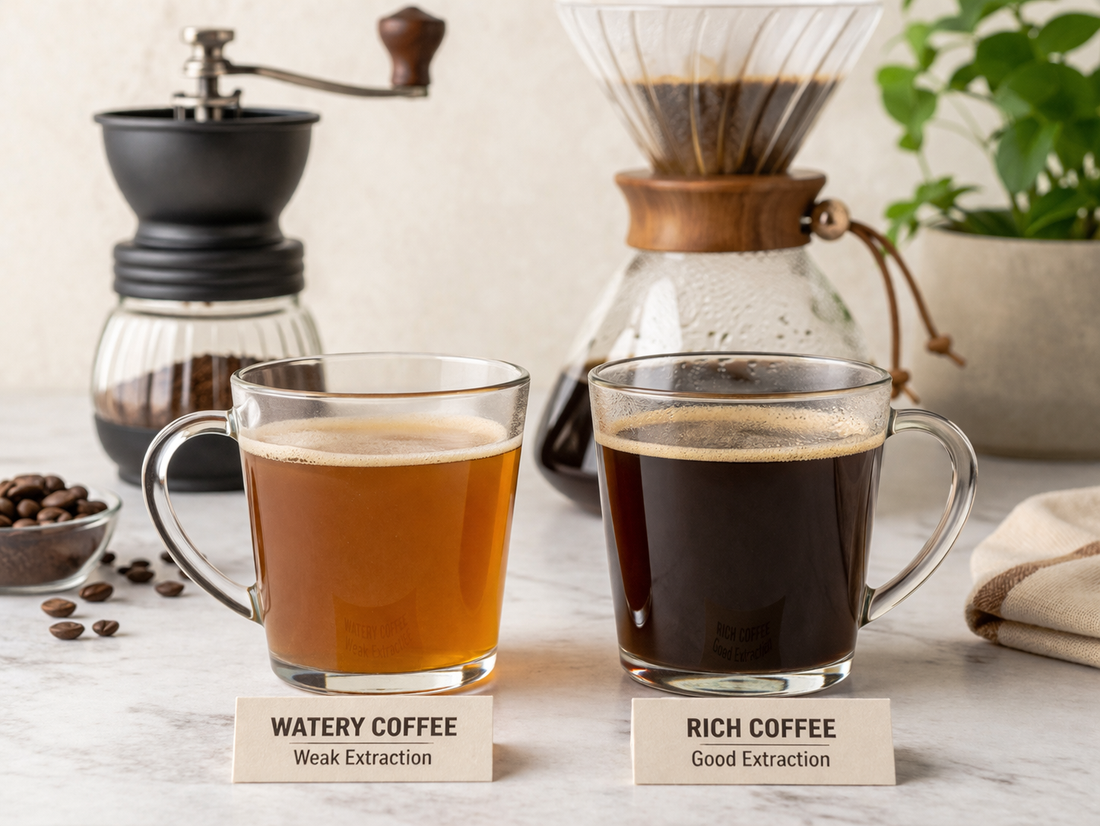
Why Your Coffee Tastes Watery (Even When You Use Enough Coffee)
If your coffee tastes watery—even when you’re using what should be enough coffee—the issue usually isn’t how much coffee you’re using.
It’s how your coffee is being extracted.
Most watery coffee problems come down to grind size, brew time, or uneven extraction—not just ratio.
Once you fix that, your coffee can go from flat and disappointing to rich and balanced almost immediately.
The Fastest Way to Fix Watery Coffee
Before we get technical, here are the quickest fixes that work for most people:
If your coffee tastes watery, try this first:
- Grind slightly finer
- Let it brew a little longer
- Make sure all grounds are fully saturated
- Use fresh coffee (not pre-ground sitting for weeks)
These small changes alone fix most watery coffee issues within one brew.
Why Your Coffee Tastes Watery (Even With Enough Coffee)
Watery coffee is usually a sign of under-extraction.
That means the water didn’t pull enough flavor out of the coffee grounds.
Think of it like this:
Coffee brewing isn’t just about how much coffee you use—it’s about how effectively water extracts flavor from it.
If extraction is weak, your coffee will taste thin, hollow, or watery… even if your ratio is correct.
The 4 Most Common Causes (And How to Fix Them)
1. Your Grind Is Too Coarse
This is the #1 cause.
When coffee is ground too coarse, water flows through too quickly and doesn’t extract enough flavor.
Fix:
Use a slightly finer grind.
If you’re unsure what grind you should be using, check out How Do I Choose My Coffee Grind.
2. Your Brew Time Is Too Short
If your coffee isn’t in contact with water long enough, it won’t fully extract.
This happens a lot with:
- Fast drip machines
- Pour overs poured too quickly
Fix:
Slow down your brew slightly or allow more contact time.
3. Your Coffee Isn’t Fully Saturated
Dry pockets = weak extraction.
If water doesn’t evenly hit all the grounds, parts of your coffee never get extracted.
Fix:
Make sure all grounds are evenly wet, especially at the start of brewing.
4. Your Coffee Is Stale
Even if your technique is perfect, stale coffee won’t extract well.
It loses the oils and compounds that create body and richness.
Fix:
Use freshly roasted coffee whenever possible.
If you’re wondering whether freshness actually matters, read Is Fresh Roasted Coffee Better Than Store-Bought.
Why Adding More Coffee Doesn’t Always Fix It
This is where most people go wrong.
They think:
“It tastes weak… I’ll just add more coffee.”
Sometimes that helps—but often it doesn’t.
If your grind is too coarse or your brew is too fast, adding more coffee just creates:
- stronger watery coffee
- uneven extraction
- wasted beans
Fix extraction first. Then adjust ratio if needed.
If you want to dial in your measurements, check out How Much Coffee Should You Use Per Cup.
Watery vs Weak Coffee (They’re Not the Same)
These two get confused all the time.
Watery coffee:
- Thin body
- Hollow taste
- Lack of richness
Weak coffee:
- Low intensity
- Muted flavor
You can actually have coffee that is strong… but still watery.
That’s why fixing extraction matters more than just adding more grounds.
If your coffee tastes weak instead, read Why Does My Coffee Taste Weak.
The One Change That Makes the Biggest Difference
If you only change ONE thing:
Adjust your grind size.
It has the biggest impact on how your coffee extracts.
A small grind adjustment can completely change:
- flavor
- strength
- body
This is also why grinders matter more than people think.
If you’re using a blade grinder, it may be creating inconsistent extraction. You can learn more in What Is the Best Grinder for Coffee.
FAQs
Why does my coffee taste watery even with 2 tablespoons per cup?
Because ratio isn’t the only factor. If your grind is too coarse or your brew is too fast, you’ll still get weak extraction.
Can bad water cause watery coffee?
Yes. Water quality affects extraction. If your water is too soft or lacks minerals, it can reduce flavor extraction.
Does pre-ground coffee cause watery coffee?
It can. Pre-ground coffee loses freshness quickly and extracts less effectively, leading to flatter, thinner coffee.
Should I just use more coffee?
Not first. Fix grind and brew time before increasing your coffee amount.
Final Take
Watery coffee isn’t just about how much coffee you use—it’s about how well your coffee is extracted.
Once you dial in grind size, brew time, and freshness, your coffee will start tasting fuller, richer, and more satisfying—without needing to overload your scoop.
Learn More About Coffee
Want to improve your coffee even more?
Check out our full Coffee Education Center to keep dialing in your brew and making better coffee at home.